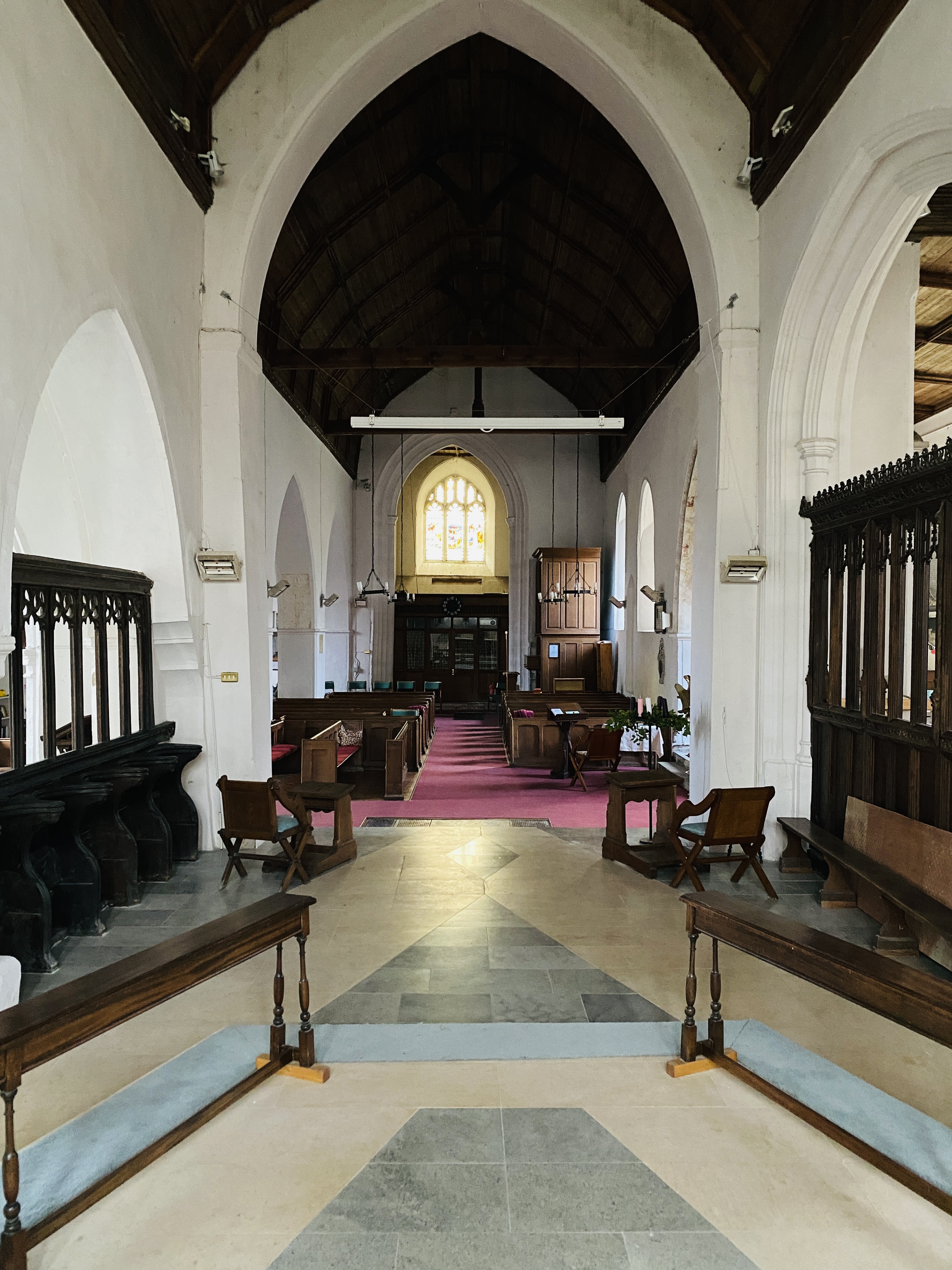
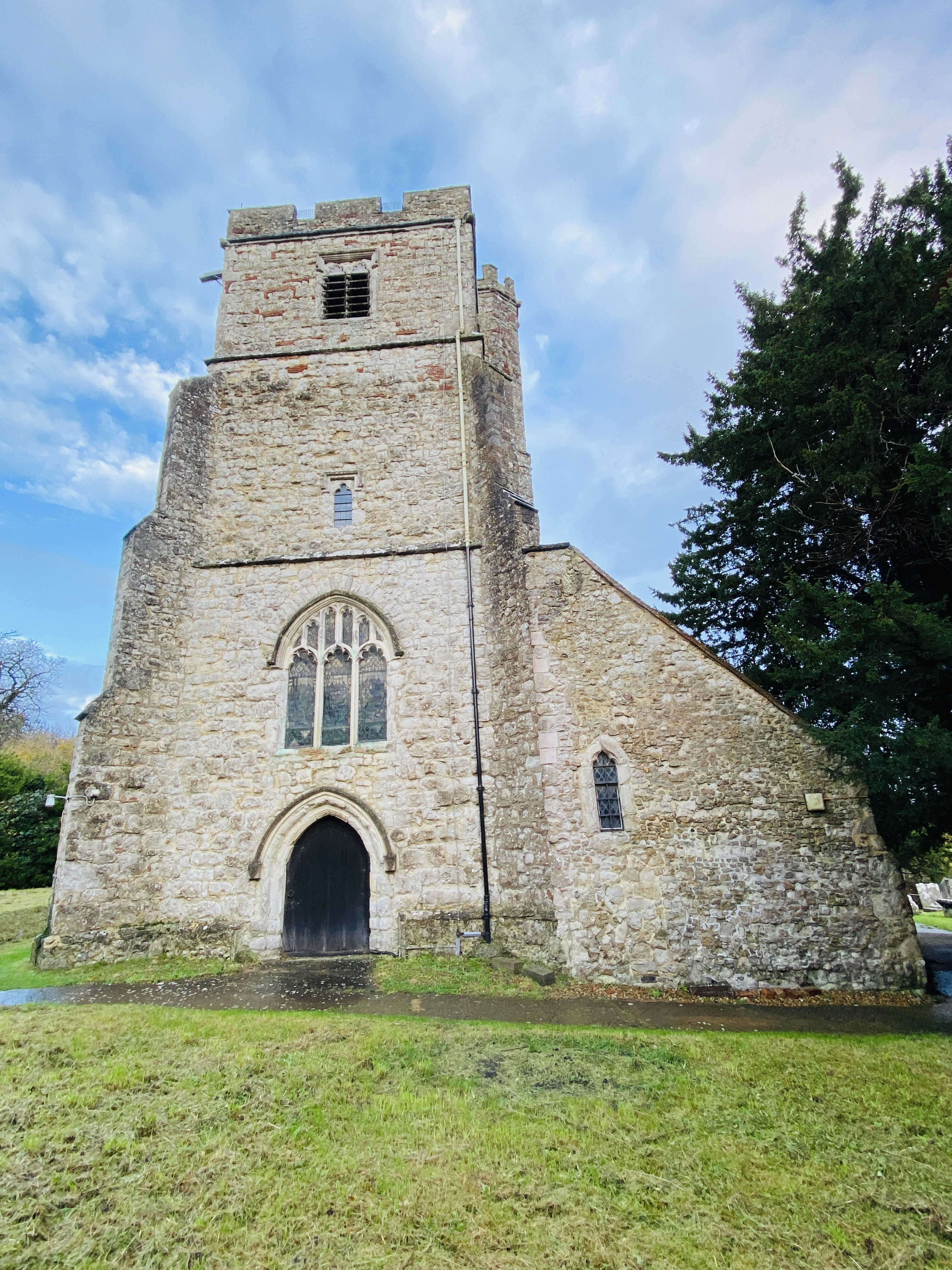
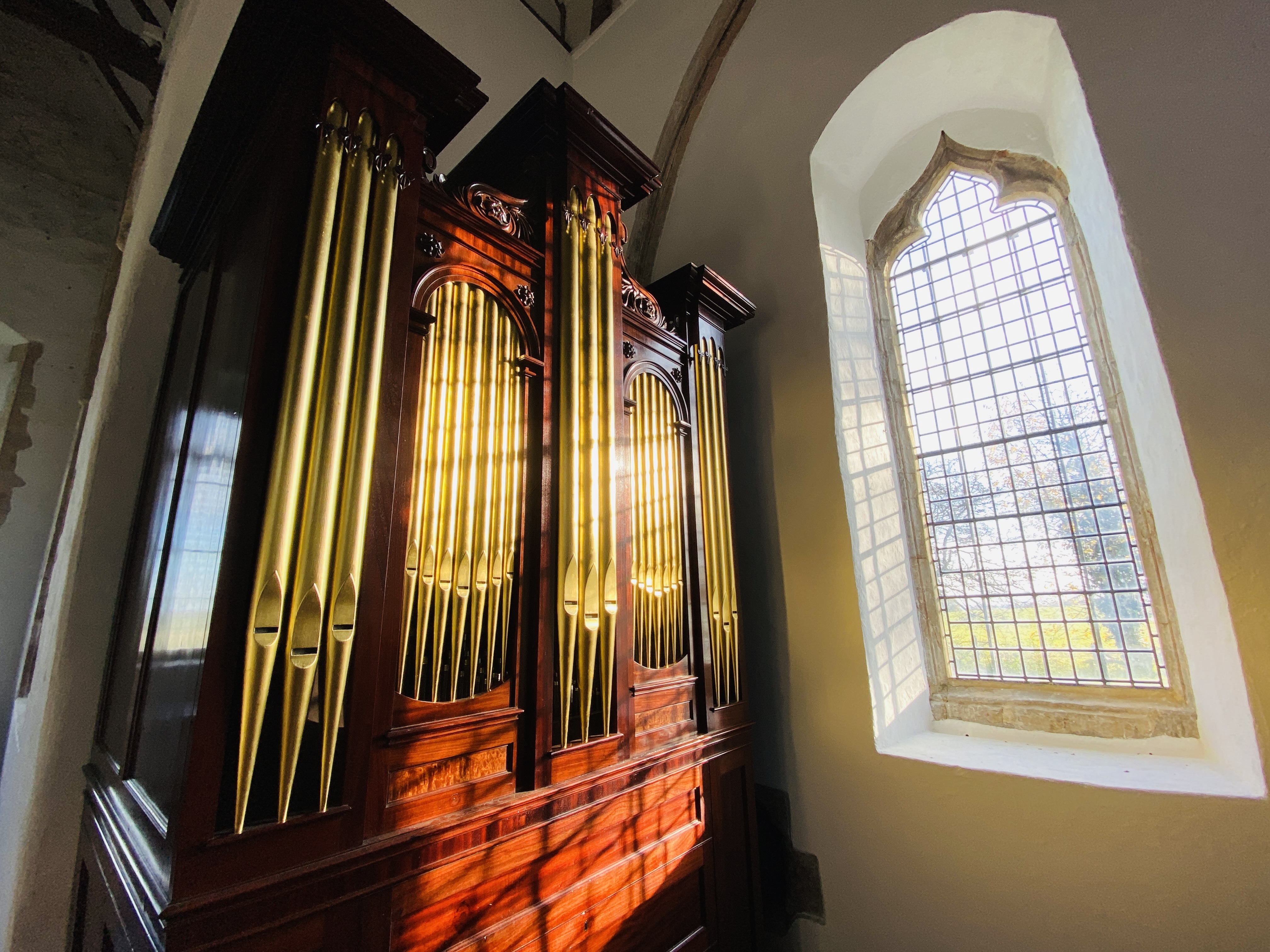
Ulcombe is a village near Maidstone in Kent. It’s name means “a deep wooded valley” with Ul from Ullas being a personal name. The manor of Ulcombe belonged to the St. Leger family whose presence is noticeable in the church with a chapel and details on the stained glass windows.
In the 16th and 17th Century Ulcombe was the location of a bell foundry run by three generations of the Hatch family (James Hatch is buried in nearby Broomfield) who made “Bell Harry” after which the central tower of Canterbury Cathedral is named.
All Saints is a 12th Century church which was Grade I listed in April 1968. It houses monuments to the St. Leger family, the Marquess and Marchioness of Ormandy and Lady Sarah Wandesford, daughter of the Earl of Carrick. Works continued from the 13th to the 15th Century with internal alterations from 1956-1963 and further restorations in the 1980s. It is constructed of various coursed and rubble stonework.
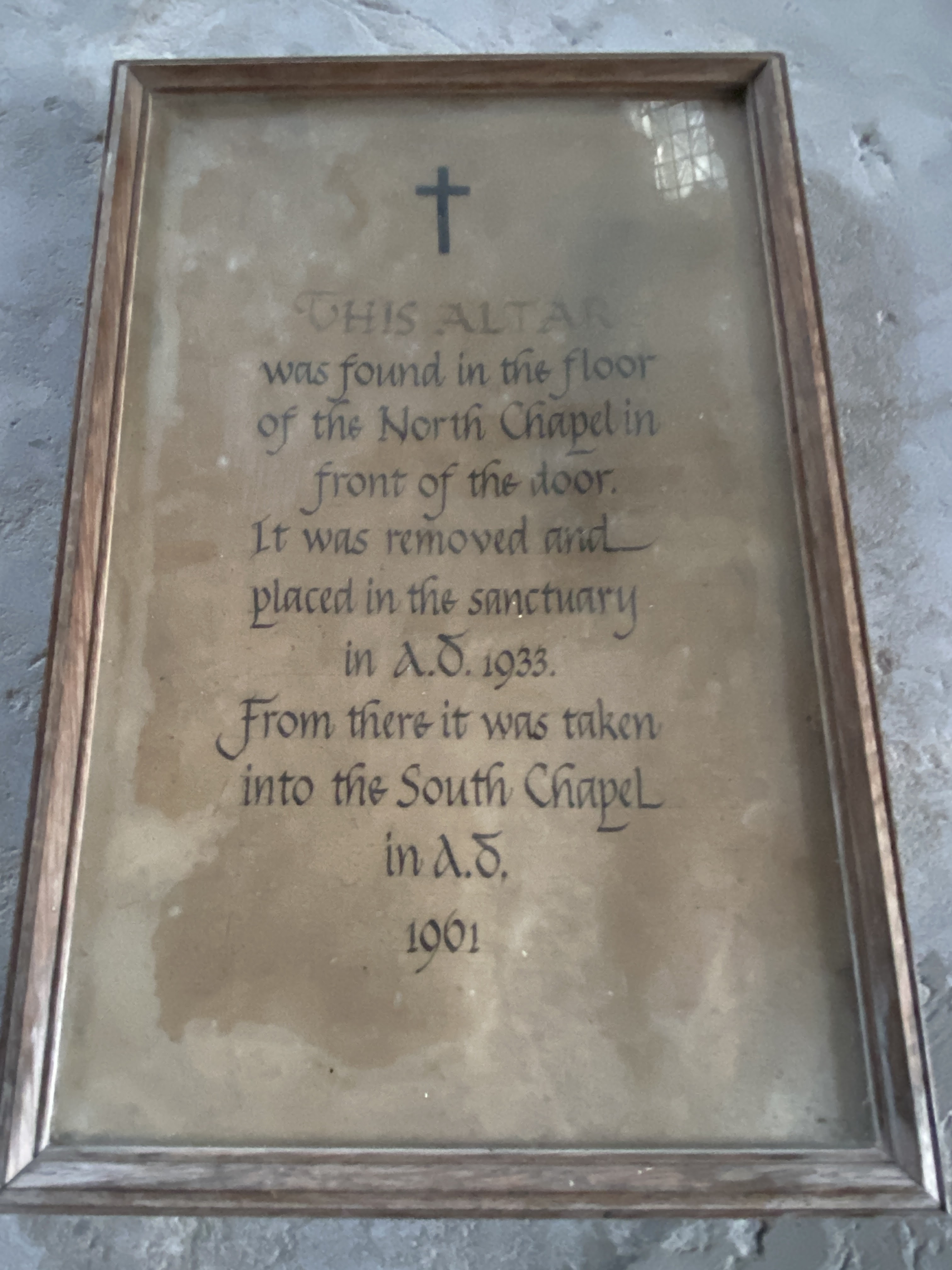
The alter was found in the floor of the North Chapel in front of the door it was removed in 1933 and taken to the south chapel in 1961 having previously been removed circa 1555 after Nicholas Ridley, Bishop of London and Westminster, ordered the removal of alters. This started in London and soon spread countrywide.
Outside the church is an ancient Yew tree rumoured to have stood since before the birth of Christ.
A blue plaque outside claims that Saint John Henry Newman served at Ulcombe but this conflicts with online records that place him at Oriel Noetics and then as a preacher at Whitehall. It’s possible that Samuel Rickards, also of Oriel, who was the curate in charge of Ulcombe from 1822-1832 had Newman as a guest.