3 Feb 2026
22nd September 2025 - Lord Finesse - The Jazz Cafe
2 Nov 2025
Blue/Orange
Play: Blue/Orange by Joe Penhall
Venue: Greenwich Theatre
Visited: 25th October 2025
(Playing 1st - 26th October 2025)
Cast: John Michie, Rhianne
Batteto and Matthew Morrison.
The play: Described as a landmark
drama about mental health and race this play seemed to cover a few more bases.
Touching on the NHS funding crisis, sexism and ego it’s a play that doesn't shy
away from controversial topics. The fact it's twenty-five years old tells a
worrying story about how little things have changed. James Haddrell directs
this version and I've read that Penhall updated the text changing the junior
psychiatrist from a white man to an Asian woman which probably reflects the
more modern NHS.
Set in a meeting room in a
psychiatric hospital over around 24 hours a young black man has been diagnosed
with borderline personality disorder. The junior psychiatrist supporting him is
idealistic and invested, at times a little too far. The senior psychiatrist is
detached, career minded, judgemental and probably a little jaded. I am sure
there are parallels between this role and many other jobs.
What follows is a battle of wills
between the old order and the new and the focus of the patient is sidelined in
a bureaucratic scuffle that totally loses focus on the diagnosis of the patient
and the best possible treatment. In fact, the patient, Christoper, is sidelined
for much of the second part of the play as tensions rise between the doctors
and the battle to win him over means his actual issues are barely touched on. I
won’t give away any more as it is a tense, darkly comic in places and worrying
play – you hope that this is an extreme example and never occurs in real life
but I am sure it does.
This play seems to pop up on a regular basis – well worth a visit.
1 Nov 2025
Kurt Cobain - Unplugged
On Thursday 30th October 2025 the Royal We (Dad&Daughter) visited the Royal College of Music. A stumble from The Royal Albert Hall its in an area of architectural spendor and the inside of the building matched the outside. A centre of learning and prestige, I managed to sneak in.
Let's have a blurb - Step into the world of Kurt Cobain and explore the legacy of Nirvana, a band that defined a generation. Explore their iconic 1993 MTV Unplugged performance, one of Nirvana's final televised appearances before Cobain’s death just five months later. See up close Cobain’s rare Martin D-18E guitar, uniquely adapted for his left-handed play, shaping the unmistakeable sound that defined Nirvana’s music. In 2020, it became the most expensive guitar ever sold at auction, bought for over $6 million by Australian entrepreneur Peter Freedman AM.
The exhibition, at the Royal College of Music Museum, reunites Kurt Cobain’s guitar with another piece of rock history – his famous olive-green mohair cardigan, worn during the MTV Unplugged performance, marking the first time these two legendary items have been displayed together.
Immerse yourself in rare memorabilia, uncover insights into Cobain’s songwriting, and discover the lasting influence of a band that changed the face of rock music.
Co-curated by Alan di Perna – one of America’s foremost rock journalists, and Royal College of Museum Curator Gabriele Rossi Rognoni. Source


10 Jul 2025
19 Mar 2025
NMEC - National Museum of Egyptian Civilization
Mamluk Lamps
A group of glass lamps decorated with multi-colored enamel, which were designated for lighting in religious establishments during the Mamluk Period. These lamps are distinguished by its floral decorations and inscriptions in the Naskh script, which depend mostly on the Ayat al-Nur. These lamps were lit by means of a wick of cotton or linen placed inside a glass container containing clean oil, usually olive oil. This group of lamps belongs to the Sultan Hassan School, Al-Nasir Muhammad Ibn Qalawun School, and Al-Zahir Barqua School.
[Mamluk Period - 8th century AH - 14th century AD / Glass]
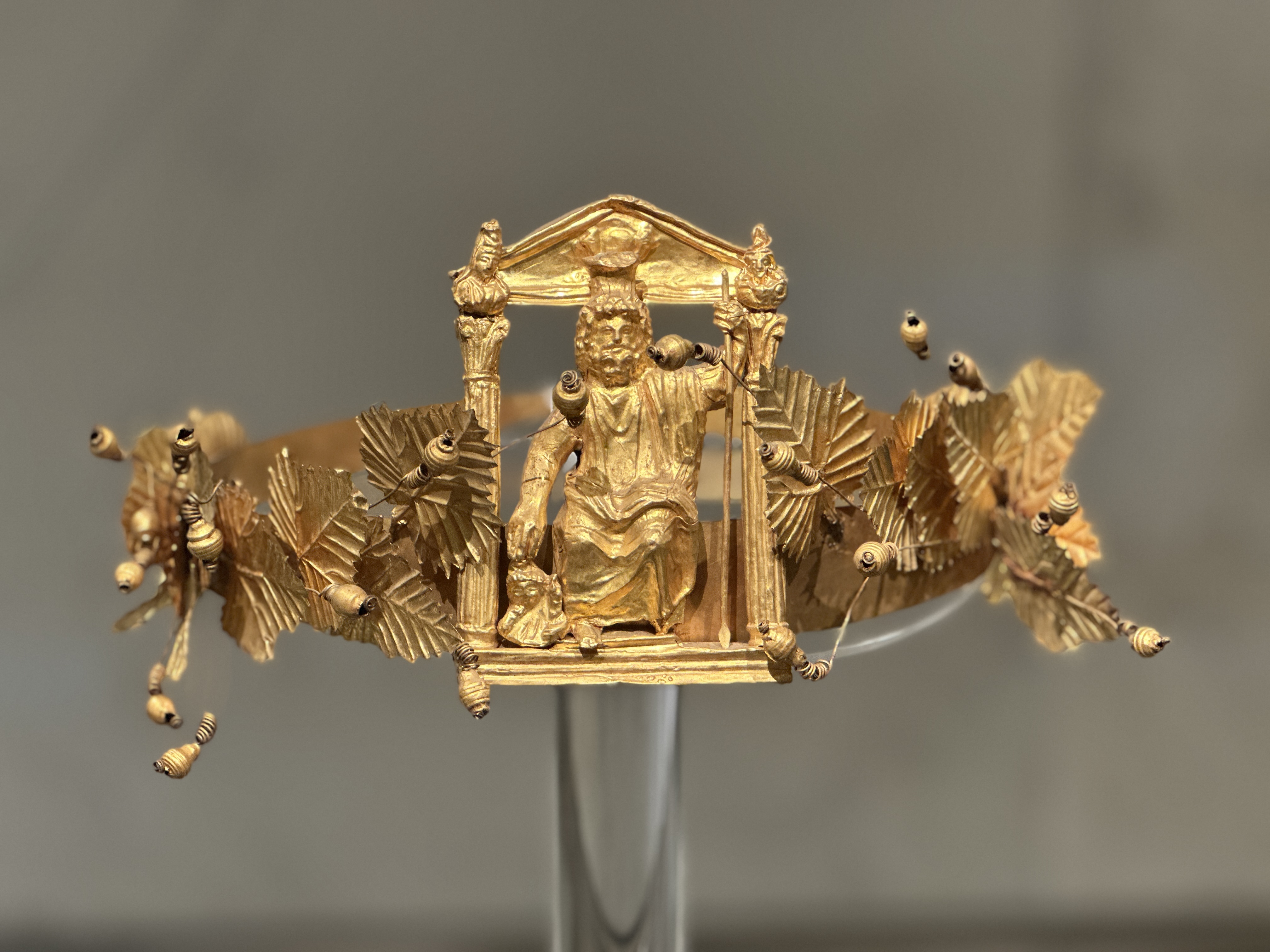
Dush Treasure
This treasure was found in 1989 inside a pottery vessel that was hidden in the walls of a Roman fort that includes a temple of the gods Serapis, Isis, and Harpocrates in Dush, Kharga Oasis. The treasure includes a golden wreath with the image of the god Serapis at its center, two bracelets, and two gold necklaces made of 187 golden plaques.
[Roman period, AD 2nd century]
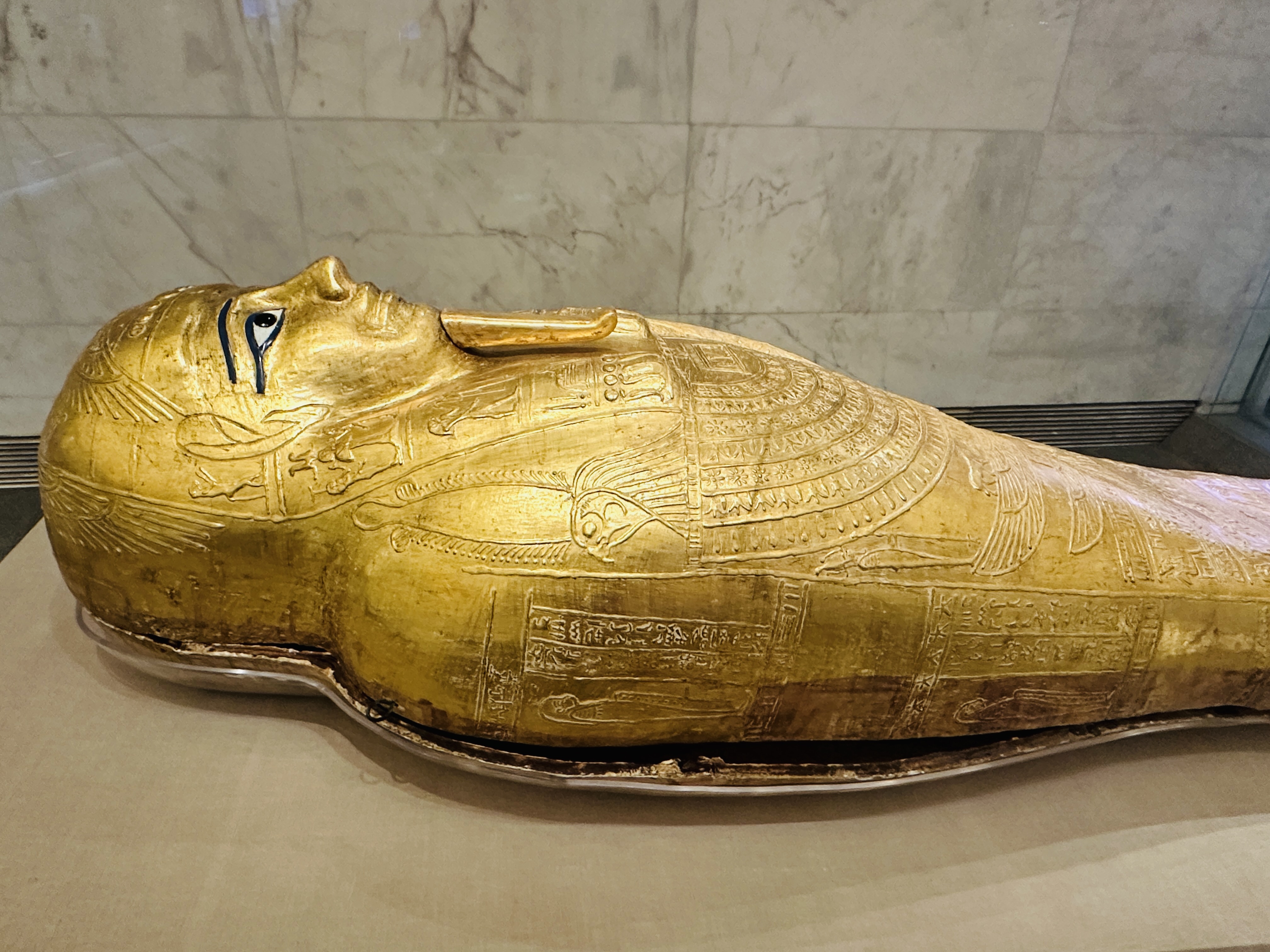
Coffin of Nedjemankh
Nedjemankh was a priest of the god "Heryshef" at the city of Ahnas. His coffin is made of gilded cartonnage with inlaid eyes and covered with scenes as well as funerary hymns from the Book of the Dead had made it considered to be one of the masterpieces of coffins from the Ptolemaic Period.
[Repatriated from the Metropolitan Museum of Art in New York / Ptolemaic Period (305 - 30 BC) / Gilded stucco]
آختى
كان رع حور أختى يمثل إتحاداً عقائدياً ما بين الإله رع رب ملكية السماء والإله حورس رب ملكية الأرض كتعبير عن سلطة إله الشمس حين يسيطر على الأفقين ويتجلى على الأرض فيجتمعان فى كيان واحد.
الدولة الحديثة، الأسرة التاسعة عشر (١١٨٦-١٢٩٥ ق.م)/ صان الحجر / جرانوديوريت
Ra-Horakhty
Ra-Horakhty represented a doctrinal union between the heavenly kingship represented by the god Ra and the earthly kingship represented in the god Horus as an expression of
on the earth.The authority of the sun god when he dominated the two horizons and was manifested
[New Kingdom, 19th Dynasty (1295 - 1186 BC) / San al Hagar / Granodiorite]
Cippus of Horus
The oldest of cippi (sing. Cippus) of Horus is dated back to the Late Period, and became popular during the Ptolemaic Period, where Horus the son of Isis is depicted on as a naked child with a side lock, standing on two crocodiles and holding a group of snakes, scorpions, deer and lions, which represent symbols of evil. These cippi were placed in temples and homes and registered on them the spells of Isis that repel evil and prevent the bites of scorpions and snakes. Usually, priests poured water that flowed over it while reciting Isis spells, then gathered in a small basin at the feet of Horus, and drank after that in order to ward off evil.
[Ptolemaic Period / Alexandria / Green Schist]
The vizier Paser
Paser lived during the reign of Seti I, where he held the title of the sole companion of the king and held many positions as the royal palace advisor, the governor of the city "Thebes", and who receives the tribute of the foreign lands for the king. Then, during the reign of Ramses Il, he became a judge, a seal bearer and deputy of the king in Nubia where he supervised the construction works of the temple of Abu Simbel. He also assumed the position of high priest and overseer of the Karnak temple until his death in the 25th year of the reign of Ramses I. Paser appears in this statue carrying an altar topped by the head of a ram, the symbol of Amun Ra Lord of Karnak
[New Kingdom - 19* Dynasty - reign of Ramesses I (1279-1213 BC) / Karak / Black Granite]
Purification with water
Upon his arrival from the other world, the sun god purifies himself in eastern horizon before his shining in Heaven, where the four-gods "Horus", the Lord of the North, "Seth", the Lord of the South, "Dewen-anwy", the Lord of the East, and "Thoth", the Lord of the West, pour the water of life and power over him from the four corners of the universe. This rare statue depicts king Amenhotep Il, assimilated with the sun god in his shining in the moment of his purification on the horizon.
[New Kingdom, 18th Dynasty (1550 - 1295 BC) / Valley of the Kings - Thebes / Alabaster]
The Coffin of Lady Isis
This coffin was discovered in the tomb of Sennedjem among several coffins of the family members. It belongs to Lady Isis, wife of the artisan Khabekhent, son of the Sennedjem. The outer cover depicts Isis in a loose robe carrying the sacred ivy leaves, and the coffin is surrounded by the four sons of Horus to protect her body.
[New Kingdom, 19th Dynasty (1295 - 1186 BC) / Deir el-Madina, Thebes / Wood - Pigment]
Sarcophagus of Kha'y
Kha'y was one of the most important statesmen during the New Kingdom. His anthropoid sarcophagus registered his positions as he was a fan bearer to the right of the king and the chief overseer of the southern foreign countries.
[New kingdom. 19th Dynasty / Black Granite]
The inner coffin of Sennedjem is made in anthropoid form, where his mummy was placed inside. The inner cover depicts Sennedjem in in his worldly clothes as he wears a long kilt of white linen. The coffin is decorated with funerary scenes of the protective goddesses from the Book of the Dead, while Sennedjem receiving provisions from the Tree Goddess.
[New Kingdom, 19th Dynasty (1295 - 1186 BC) / Deir el-Madina, Thebes / Wood - Pigment]

The Protective Goddesses
A group of statues of the protective goddesses that were found in the tomb of King Amenhotep II, they were responsible for protecting the body of the king in his afterlife journey, they are "Wadjet", depicted as a cobra, "Nekhbet" the vulture, "Meretseger" in the form of the winged Cobra, and the cows "Mehet-Weret" and "Hathor" goddesses of heaven. These goddesses are known to be among the oldest who were worshiped in ancient Egypt.
[New Kingdom - 18th Dynasty (1550 - 1295 BC) / Valley of the Kings - Thebes / Wood]
Dated visited 7th March 2025
1 Feb 2024
Balloon Museum Art Installation
“Balloon Museum is a format created by a curatorial team that designs and realizes contemporary art exhibitions with specific works in which ‘air’ is a distinctive element. A journey through out-of-scale installations with unexpected shapes in which the interaction with viewers is placed at the center of the experience. Art one can touch, to live with and share, never static that creates an innovative relationship with the user, giving life to an experiential path of socialization. This unconventional approach to culture is fascinating and intriguing to adults and children, as they are passionate and curious, and are helping to establish Inflatable Art as one of the most acclaimed ‘Pop’ movements in the world.”
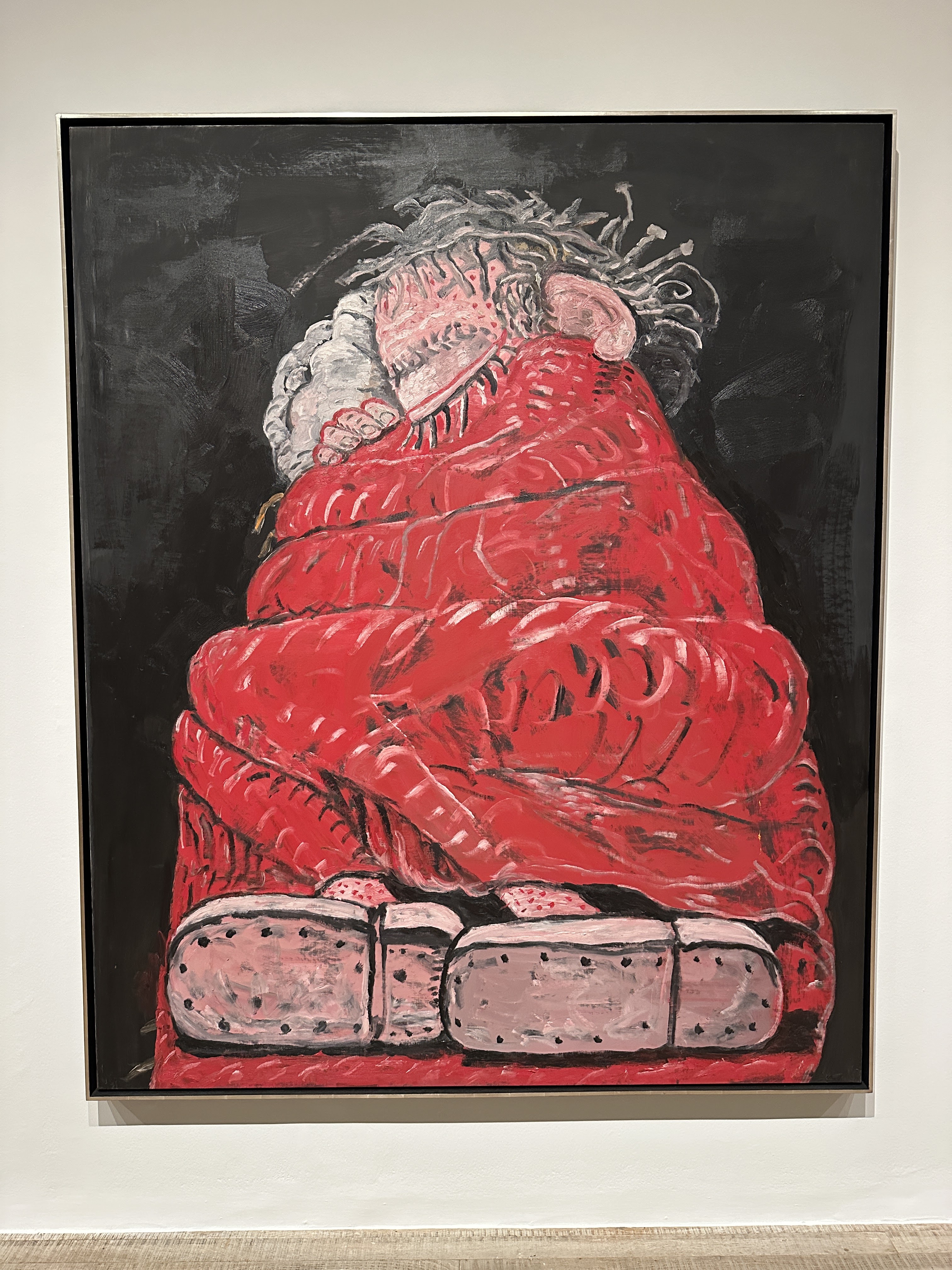
Phillip Guston at The Tate Modern
I also saw two quotes I enjoyed -
“When you start working, everybody is in your studio - the past, your friends, enemies, the art world, and above all, your own ideas… But as you continue painting, they start leaving, one by one, and you are left completely alone. Then, if you’re lucky, even you leave” (John Cage)
“The canvas is a court where the artist is prosecutor, defendant, jury, and judge… You cannot settle out of court” (Phillip Guston)
From the Tate Modern website - For over 50 years, artist Philip Guston restlessly made paintings and drawings that captured the anxious and turbulent world he was witnessing.
Born in Canada to a Jewish immigrant family, he grew up in the US and eventually became one of the most celebrated abstract painters of the 1950s and 1960s, alongside Mark Rothko and his childhood friend Jackson Pollock.
His early work included murals and paintings addressing racism in America and wars abroad. During the social and political upheavals of the late 1960s, Guston grew critical of abstraction, and began producing large-scale paintings that feature comic-like figures, some in white hoods representing evil and the everyday perpetrators of racism. These paintings and those that followed established Guston as one of the most influential painters of the late 20th century.
Guston was a complex artist who took inspiration from the nightmarish world around him to create new and surprising imagery. This exhibition explores how his paintings bridged the personal and the political, the abstract and the figurative, the humorous and the tragic.
Philip Guston is the first major retrospective on the artist in the UK in nearly 20 years.
The exhibition is co-organised by Tate Modern, the Museum of Fine Arts, Boston, the National Gallery of Art, Washington, and the Museum of Fine Arts, Houston
Visit - 29th January 2024. Thanks to BW for arranging x